The SEO Tools Malaysian Businesses Actually Need in 2026 (The Free Stack That Does 80%, and When to Pay)
The SEO Tools Malaysian Businesses Actually Need in 2026 (The Free Stack That Does 80%, and When to Pay)
TL;DR
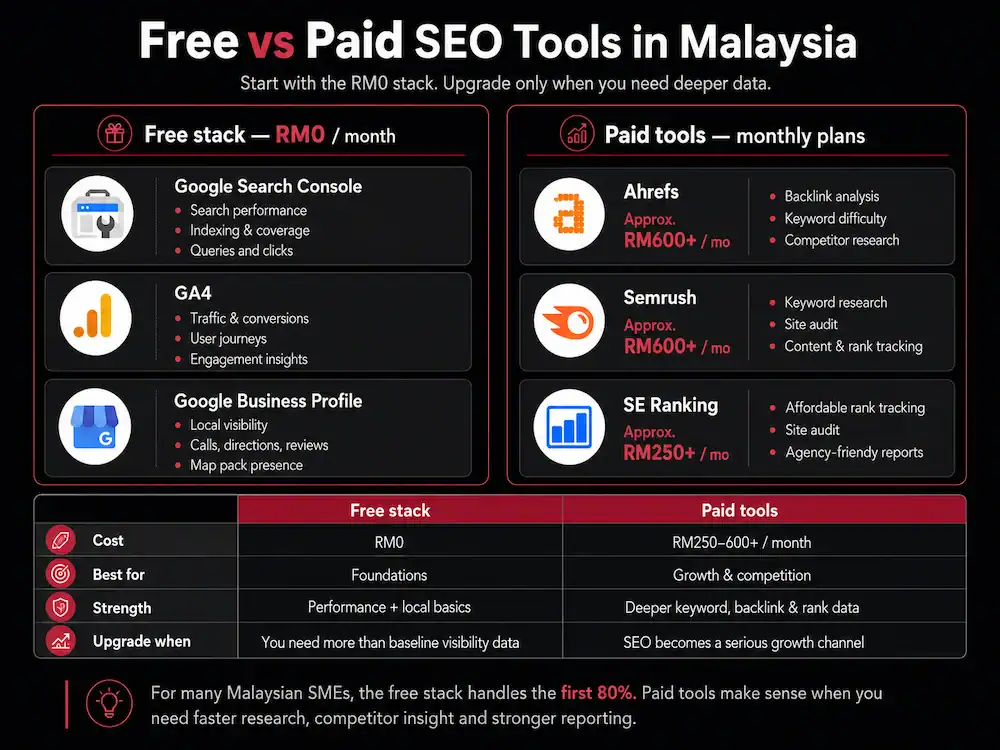
You can do ~80% of real SEO with free tools. Google Search Console, Google Analytics 4, Google Business Profile and the free tier of Screaming Frog cover the fundamentals for most Malaysian SMEs — before you spend a single ringgit.
Paid tools are about speed and depth, not magic. Ahrefs, Semrush and SE Ranking are worth it once you’re producing content and building links at scale — expect roughly RM220–RM650 a month.
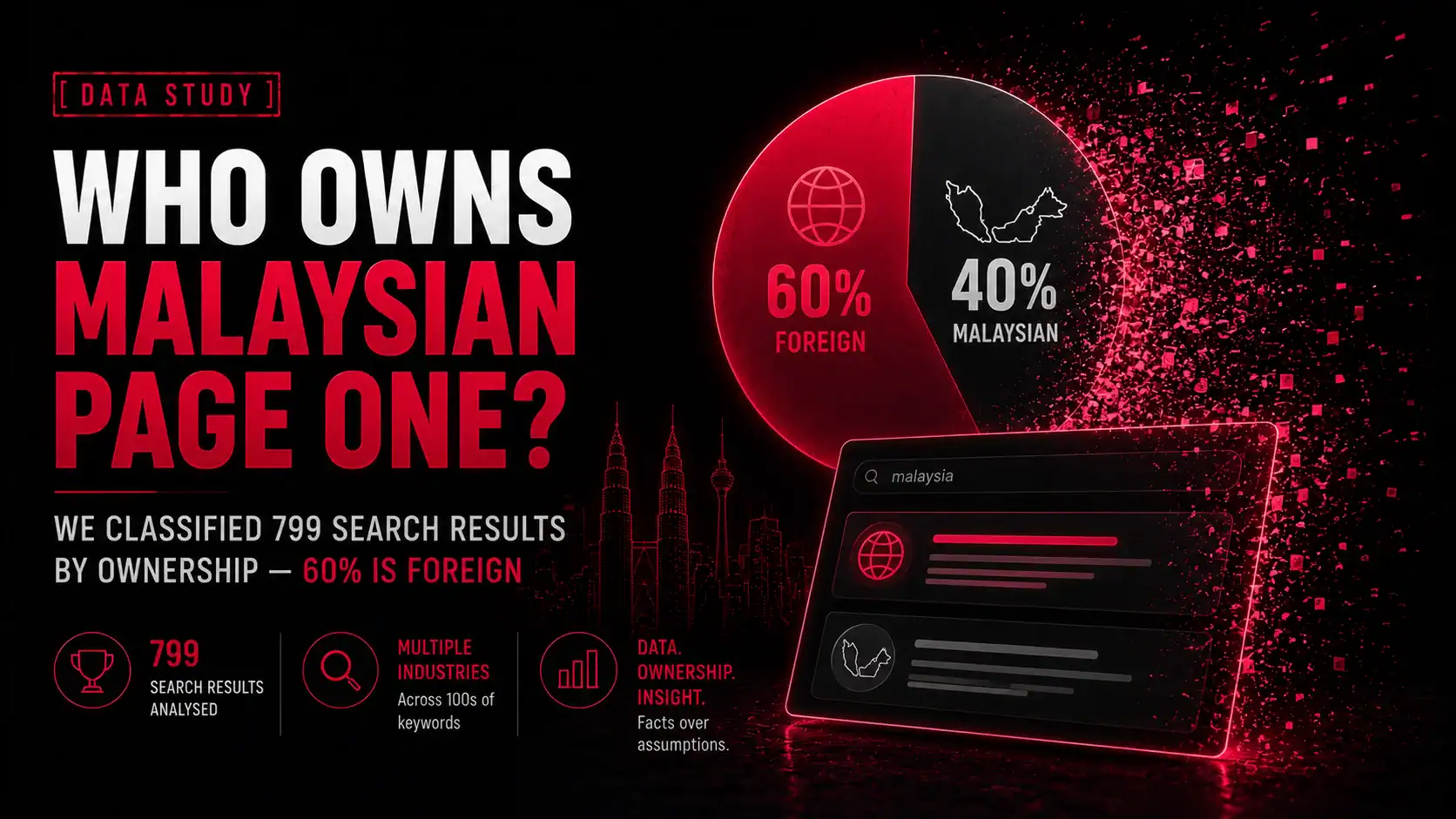
The most valuable use of a tool isn’t ranking — it’s catching a bad agency. The same free reports that track your SEO will expose bought links, and in our own study 88% of Malaysian businesses on page one of five local SERPs were ranking on near-zero, largely bought authority.
A tool is a kitchen, not a chef. The stack below, and the game plan for which to use at each stage, matters far more than owning the most expensive subscription.
Search “best SEO tools” and you’ll get a hundred near-identical lists, most of them quietly ranked by which brand pays the biggest affiliate commission. That’s not what this is. We’re a Malaysian SEO agency; the tools below are the ones we actually open every day to move Malaysian businesses up Google — and, just as often, to check whether the last agency did something that’s about to get a client penalised.
So this guide answers the two questions those affiliate lists skip. First: what does a Malaysian business genuinely need, given most of you are not spending USD139 a month on Semrush? Second: how do you use these tools to protect yourself — to audit your own site and spot when “SEO” is really just spam? Let’s get into it.
Because this is effectively a ranked recommendation, you deserve to know the criteria — not just a list handed down as gospel. We scored every tool against five things that matter to a Malaysian SME, not to a Silicon Valley growth team.
Criterion
Weight
What we asked
Real ROI for an SME
30%
Will it actually change what you rank for, or just produce dashboards?
Free or affordable tier
25%
Can a business on a tight budget get value without a card?
Malaysian relevance
15%
Local search volumes, .my data, Google Malaysia results, MYR context?
Learning curve
15%
Can a non-specialist owner get something useful in an afternoon?
Self-defence value
15%
Does it help you audit your own site and catch a dishonest agency?
That last criterion is unusual for a tools list, and it’s deliberate. Most Malaysian business owners will never run a full SEO campaign themselves — but every one of them should be able to check whether the agency they’re paying is building real authority or renting spam. The right free tool makes that a five-minute job.
Start here: the free stack that does 80% of the job
Here is the uncomfortable truth the affiliate lists bury: for a typical Malaysian SME, the free tools cover roughly 80% of what matters, and they come from Google itself. Set these up before you pay for anything.
Free tool
What it does
Why it matters
Google Search Console
Shows the exact queries you rank for, your position, clicks and impressions
Your single source of truth — real Google data, not an estimate
Google Analytics 4
Tracks what visitors do after they land
Tells you which pages actually convert, not just which get traffic
Google Business Profile
Your listing in Maps and the local pack
For a local Malaysian business, often the biggest single source of calls
Screaming Frog (free)
Crawls up to 500 URLs to find broken links, missing titles, redirects
A full technical audit of most SME sites, for free
PageSpeed Insights
Measures Core Web Vitals (loading speed, stability)
Speed is a ranking factor and a conversion factor in one
Google Keyword Planner
Free keyword volumes (via a Google Ads account)
Enough to find what Malaysians actually search for
Bing Webmaster Tools
Search Console’s equivalent for Bing, with free keyword tools
A free second data source, and it powers some AI answers
Google Search Console: the one you cannot skip
Google Search Console (GSC) is non-negotiable, and it is completely free. It tells you, straight from Google, every search query bringing people to your site, where you rank for each, how many people click, and which pages Google has indexed. There is no paid tool on earth with better data about your site, because this is Google’s own record. If you do nothing else after reading this article, verify your site in GSC today. Everything else — content decisions, technical fixes, catching a bad agency — starts here.
Google Analytics 4 and Google Business Profile
GSC tells you how people find you; Google Analytics 4 tells you what they do next — which pages hold attention, which leak visitors, which quietly drive enquiries. For a local Malaysian business, though, the most underrated free tool is your Google Business Profile. When someone searches “aircond service near me” or “kontraktor rumah Shah Alam,” the Maps pack sits above the organic results. A complete profile with real photos, correct hours, service areas and a steady trickle of genuine reviews often out-earns the website itself. It costs nothing but attention.
Screaming Frog (free): a technical audit for RM0
The free version of Screaming Frog SEO Spider crawls up to 500 URLs — more than enough for the vast majority of Malaysian SME websites. Point it at your site and it surfaces broken links, redirect chains, missing or duplicate title tags, pages with no meta description, and orphaned pages nothing links to. That last one matters more than it sounds: we recently found two valuable Sterrific blog posts that had been quietly deleted, wasting dozens of hard-won backlinks — exactly the kind of thing a crawl catches.
Free tools have one real limitation: they tell you about your own site, but very little about everyone else’s. Google Search Console can’t show you a competitor’s backlinks, the keywords they rank for that you don’t, or the true difficulty of a term you’re chasing. You’ve outgrown the free stack when you catch yourself asking questions like these:
“Why is that competitor outranking me?” You need to see their backlinks and content — free tools can’t.
“Which keywords should we target next?” At scale, you need difficulty scores and gap analysis, not guesswork.
“Are our rankings going up or down, daily?” GSC is delayed and averaged; a rank tracker is precise.
“Is our backlink profile healthy — or toxic?” This is the big one, and it’s where a paid tool pays for itself in a single afternoon.
If you’re publishing content regularly, competing for commercial keywords, or paying an agency and want to verify their work, it’s time to add one paid tool. Not five. One.
The paid tools worth the ringgit (and who each suits)
Prices below are the public list rates as of mid-2026, converted at roughly USD1 = RM4.50 so you can budget in ringgit. You do not need all of these — pick the one that matches your job.
Ahrefs is what we reach for when the question is about links or competitors. It shows you who links to any website, the strength of those links (its Domain Rating score), the exact keywords a competitor ranks for, and — crucially — whether a backlink profile is real or manufactured. If your job is to understand why someone outranks you, or to check whether your own links are healthy, Ahrefs is the sharpest instrument on the market. Its free Webmaster Tools tier even gives verified site owners a slice of that data at no cost.
Semrush — the all-in-one workhorse
Semrush is the Swiss Army knife: keyword research, content optimisation, rank tracking and site audits in one subscription. If you want a single dashboard to run a whole content programme, it’s hard to beat — which is also why it’s the priciest of the mainstream options at roughly RM630 a month. Most serious practitioners eventually run both Semrush and Ahrefs; most Malaysian SMEs need neither yet.
SE Ranking and Mangools — the value picks
For a growing Malaysian business that wants Semrush-style capability without the enterprise price, SE Ranking (around RM220/month) is the value sweet spot — daily rank tracking, keyword research, technical audits and backlink monitoring in one affordable package. If you’re nervous about complexity, Mangools is the gentlest on-ramp: cheaper still, and genuinely pleasant to use for keyword research and rank tracking. Either is a smart first paid tool.
Here’s what the recycled 2019 lists miss entirely. Search in 2026 isn’t just ten blue links — it’s AI Overviews summarising answers at the top of the page, and buyers asking ChatGPT and Gemini directly. Ranking #1 no longer guarantees the click. That has created a new job for your tools: tracking whether you show up in AI answers, not just organic results.
Practically, this means two additions to the stack. First, both Ahrefs and Semrush have added AI-Overview and AI-visibility tracking, so you can see which of your keywords now trigger an AI answer and whether you’re cited. Second, keep watching Google Search Console: when an AI Overview eats a query, you’ll often see impressions hold steady while clicks fall — a signature worth knowing. You don’t need a new subscription for this yet, but you do need to stop assuming position #1 equals traffic.
This is the section no affiliate list will write, because it doesn’t sell subscriptions. The single highest-ROI thing a Malaysian business owner can do with an SEO tool is audit the SEO they’re already paying for.
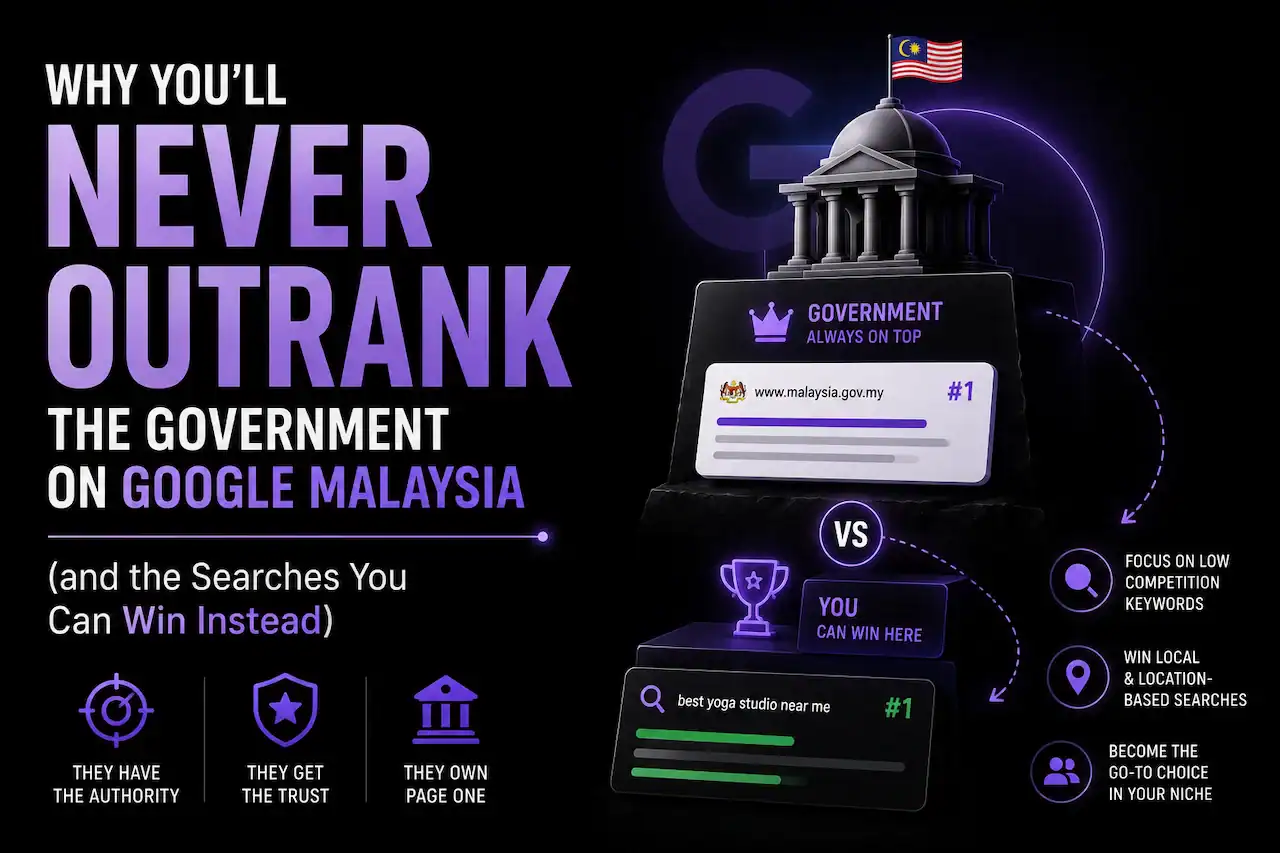
Why does this matter so much? Because in our own data study of live Google Malaysia results, 88% of the local businesses ranking on page one across five competitive searches were sitting on a Domain Rating of 10 or below — near-zero authority, propped up by hundreds of bought links. Some profiles even carried anchor text advertising the spam vendor’s own Telegram channel. If your agency is quietly buying those links for you, you inherit the risk: when Google tightens, the rankings vanish and there’s nothing underneath.
Here’s the 15-minute check, using only free and freemium tools:
Open Google Search Console > Links > Top linking text. Read your most common anchors. Your brand and services are healthy. Vendor phrases, “buy backlinks,” or foreign casino/loan words mean someone bought them.
Run your domain through Ahrefs’ free Webmaster Tools or backlink checker. A Domain Rating far below your rankings, or hundreds of referring domains you don’t recognise, is a red flag.
Watch the trend. Hundreds of new links in one month, then nothing, is a purchase, not a campaign.
Malaysian operators have long been sceptical of the “too cheap to be true” end of this market. As one Lowyat.NET member warned about free-and-cheap SEO offers: “the SEO free submission, please don’t use it, they going sell your email to 3rd party. The world where got such always-free one?” The instinct is correct — and a free tool in your own hands is how you verify it.
Your recommended stack, by stage
Don’t buy tools you can’t use. Here’s what we’d actually recommend at each stage of a Malaysian business.
Stage
The stack
Monthly cost
Just starting / solopreneur
GSC + GA4 + Google Business Profile + Screaming Frog free
RM0
Growing SME
The free stack + one paid tool (SE Ranking or Mangools)
~RM135–220
Serious / competitive niche
Free stack + Ahrefs (and Semrush if content is a core channel)
~RM580–1,200
Notice the pattern: the free stack never leaves. You add paid tools on top when a specific question demands it — not as a substitute for the fundamentals.
The mistakes that waste tool budgets
We see the same errors on repeat when a Malaysian business first invests in SEO tools:
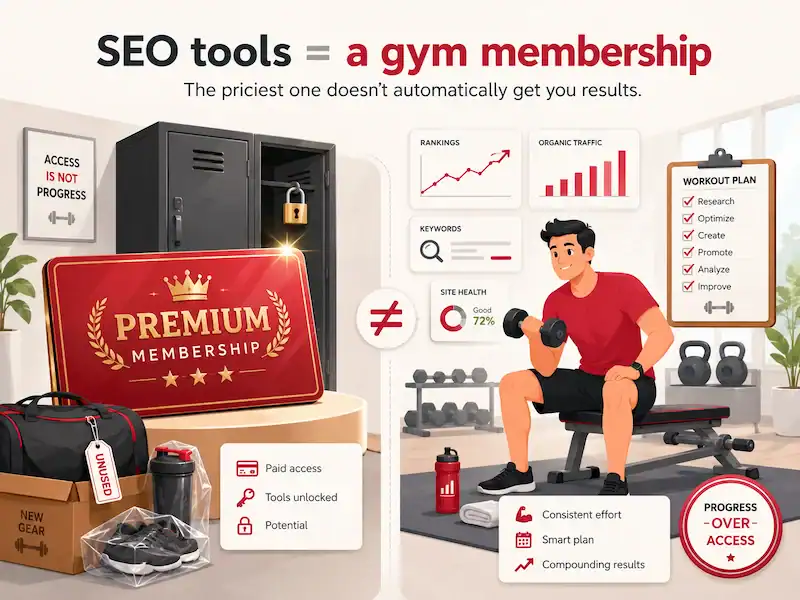
Buying the tool before the skill. A RM630 Semrush plan you check twice a month is worse than a free GSC you read every week.
Mistaking dashboards for progress. A pretty rank-tracker graph is not a ranking. Tools measure; they don’t do the work.
Chasing vanity keywords. Ranking #1 for a term nobody in Malaysia searches is a trophy, not a customer.
Ignoring the free source of truth. Owners pay for competitor tools while never opening their own Search Console — the most accurate data they’ll ever have.
The analogy that fits: SEO tools are a gym membership. Buying the most expensive one doesn’t make you fit — showing up and doing the work does. The owner who uses a free Search Console every week will outrank the one who buys Semrush and logs in twice a year, every single time.
The free-tool workflow: your first 30 days of SEO
Owning tools isn’t a plan. So here is exactly how we’d use nothing but the free stack in the first month for a Malaysian business that has never done SEO — a month that genuinely outperforms most agencies’ expensive opening move.
Week 1 — instrument everything. Verify your site in Google Search Console and set up Google Analytics 4, then link the two so your keyword data and your behaviour data live side by side. Claim and fully complete your Google Business Profile: correct categories, service areas, opening hours, and at least ten real photos. This week produces no rankings; it produces the ability to see, which everything else depends on.
Week 2 — fix the plumbing. Run the free Screaming Frog crawl and work through what it finds: broken links, redirect chains, duplicate or missing title tags, pages with no meta description. Run your key pages through PageSpeed Insights and note the Core Web Vitals. None of this is glamorous, but a fast, crawlable site is the foundation every ranking sits on — and it’s free to fix.
Week 3 — harvest the quick wins. In Search Console, filter your queries to positions 8–20 — the “striking distance” keywords where you’re on page one or two but not yet winning clicks. These are the cheapest wins in SEO: improve the page that ranks for each, tighten the title, answer the query more fully, and you can often move from position 12 to position 5 without a single new backlink.
Week 4 — plan demand and reputation. Use Google Keyword Planner and plain Google autocomplete to map what Malaysians actually search for in your niche, and sketch the first few content pieces. Then ask five genuinely happy customers for a Google review. By the end of the month you have data, a clean site, a shortlist of winnable keywords, and a growing review base — for RM0.
Keyword and content tools worth knowing (mostly free)
Keyword research is where owners assume they need an expensive subscription. Usually they don’t. A surprising amount of demand research can be done free, and tuned specifically to Google Malaysia.
Google autocomplete, “People Also Ask” and “related searches”. Start typing your service into Google Malaysia and read the suggestions — that’s real query data straight from the source, including the long-tail phrases your customers use.
AnswerThePublic and AlsoAsked. Both map the questions people ask around a topic (free tiers available) — gold for structuring an article or an FAQ that wins the “People Also Ask” box.
Google Keyword Planner. Free with any Google Ads account, and enough to see rough search volumes for Malaysian terms.
Google Trends. Underrated in Malaysia, because so much of our demand is seasonal. Trends will show you the surge in “baju raya” before Hari Raya or “hamper CNY” before Chinese New Year, so you publish before the wave, not during it.
Paid content tools like Surfer or Clearscope score your draft against what already ranks. They’re useful once content is a core channel, but for most Malaysian SMEs, reading the pages that currently rank and simply answering the question better is 90% of the value, for free.
Local SEO tools for Malaysian businesses
If you’re a local service business — aircond, renovation, plumbing, clinics, F&B — your most important “SEO tool” isn’t an SEO tool at all. It’s your Google Business Profile, and it’s free.
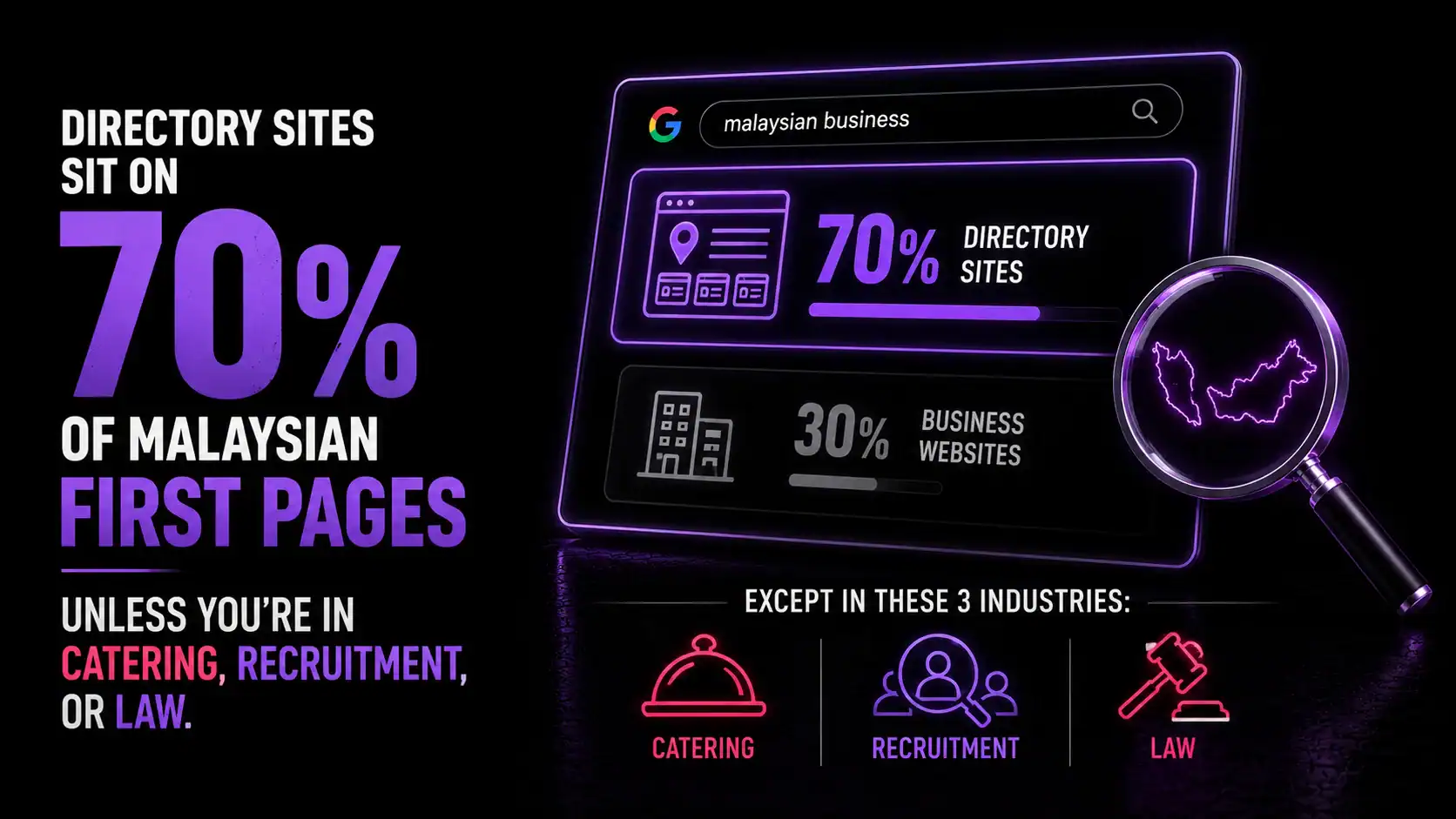
When someone searches “[your service] near me” or “[your service] [town],” Google shows a Maps pack of three businesses above the organic results. Winning a spot there often beats ranking #1 organically. The levers are all free: choose the most accurate primary category, define your real service areas, upload genuine photos regularly, answer the Q&A section, post updates, and — above all — earn a steady flow of real reviews and reply to every one. Reviews are the closest thing local SEO has to a cheat code, and they cost nothing but the courage to ask.
Two more local essentials. Keep your NAP — name, address, phone — identical everywhere it appears online; inconsistent details confuse Google and dilute your local authority. And build a handful of legitimate local citations on trusted Malaysian directories and communities (used sparingly and honestly, not spammed). You can track your Map pack position for free by searching in an incognito window from the area you serve, or with the local rank tracking built into SE Ranking if you’ve gone paid.
The honest answer to “which SEO tools do I need?” is anticlimactic and freeing: start with the free ones, because for most Malaysian businesses they do about 80% of the job. Add exactly one paid tool when you have a specific question the free stack can’t answer — usually about competitors or backlinks. And use whatever you have to do the thing almost nobody does: check that your own SEO is built on real authority, not rented spam. The tool is never the point. The judgement about what to do with it is.
Not sure what your tools are telling you?
We’ll audit your site with the same tools we’ve described here and give you a plain-English read on what’s working, what’s wasted, and whether your links are safe.
Google Search Console, without question. It’s free, and it gives you Google’s own data on exactly which queries you rank for, your positions, clicks and impressions — more accurate about your site than any paid tool. Pair it with Google Analytics 4 and Google Business Profile and you have a genuinely capable free stack.
Do I really need to pay for SEO tools in Malaysia?
Not at first. For most Malaysian SMEs the free Google tools plus the free tier of Screaming Frog cover around 80% of the work. You only need a paid tool (SE Ranking, Mangools, Ahrefs or Semrush) once you’re researching competitors, tracking rankings daily, or auditing backlinks at scale.
How much do SEO tools cost in Malaysia?
Free tools cost nothing. Among paid options, expect roughly RM135–225/month for beginner tools like Mangools, about RM220/month for SE Ranking, from around RM580/month for Ahrefs, and about RM630/month for Semrush. Screaming Frog’s paid licence is roughly RM1,200 a year.
Which is better, Ahrefs or Semrush?
Ahrefs is stronger for backlink analysis and competitor research; Semrush is the better all-in-one for keywords, content and rank tracking. Most professionals eventually use both, but a Malaysian SME rarely needs more than one — and often needs neither yet.
Can I use SEO tools to check if my agency is doing good work?
Yes, and you should. Open Google Search Console’s Links report and read your top anchor text; run your domain through Ahrefs’ free backlink checker and look at your Domain Rating and referring domains. Junk anchors, unfamiliar linking sites, or a sudden spike in links are signs of bought links that can get you penalised.
About this guide. Compiled by the Sterrific team from tools we use daily, with public list pricing accurate as of July 2026 (converted at roughly USD1 = RM4.50; check current rates before buying). Tools were scored on the five weighted criteria above — SME ROI, free/affordable tier, Malaysian relevance, learning curve, and self-defence value — not on affiliate commissions. Backlink-manipulation figures are from Sterrific’s own Ahrefs study of live Google Malaysia SERPs. Sterrific is a digital marketing agency in Petaling Jaya, Selangor.
Steve Chan is the Director of Sterrific with over a decade of experience in SEO and digital marketing. He leads data-driven digital strategies that help Malaysian businesses improve visibility, generate opportunities and achieve sustainable online growth. His work spans SEO, digital strategy, advertising and web development, with a strong focus on turning digital performance into measurable business results.
Make your brand stand out with Sterrific
Reach out today, request a Free Marketing Plan, and schedule your consultation with our experts.
“Since we started working with Sterrific back in May, their team has been a true strategic partner—helping us drive real impact and outstanding results. Just a few months into the partnership, in September, we hit a major milestone: our biggest online sales month ever. Compared to the year before, we saw an incredible 878% growth, which speaks volumes about how powerful this collaboration has been for us.”