By Steve Chan, Director, Sterrific Sdn Bhd (Petaling Jaya). SEO analysis by Alfi Rahman, SEO Lead. Native-language and figure checks by Anithira Chandrasagaran. Published 9 July 2026. This is an original study: we analysed live Malaysian page-one results across seven industries with Ahrefs (country = Malaysia) and cross-checked every industry figure against its primary source.
TL;DR
- The event is real and dated. Google’s May 2026 broad core update rolled out 21 May to 2 June 2026 (about 12 days), the second core update of the year, landing roughly 48 hours after Google I/O 2026, where Google announced an AI-driven Search overhaul powered by Gemini 3.5 Flash. Sources: Search Engine Land, Search Engine Journal, Search Engine Roundtable.
- Who “vanished”: the interchangeable middle. Trackers classified roughly 5,039 winners to 3,845 losers out of 8,887 domains, with about 80% of top-10 results shifting. Winners skewed to large, established, market-specific brands that own their content; losers were thin aggregators, job/travel/price-comparison templates, generic AI affiliate pages, and wrong-market pages.
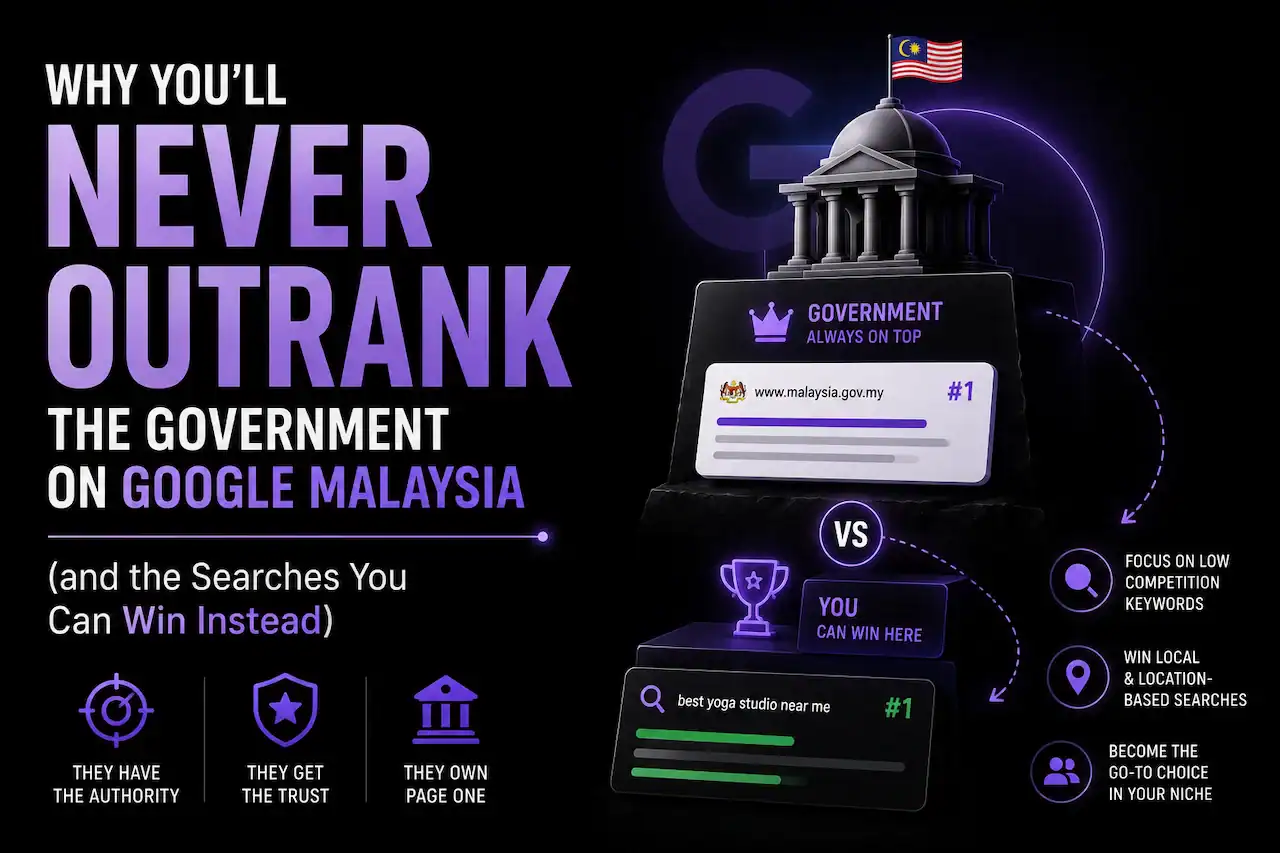
- Malaysian search splits into two worlds. Where a portal, a bank or the government owns the intent (property, consumer finance, SME loans), page one is a fortress an SME cannot crack. But where the intent is local (health clinics, local services), Google ranks genuinely local businesses at Domain Rating 3–4 over far bigger sites. Which world your query lives in decides everything.
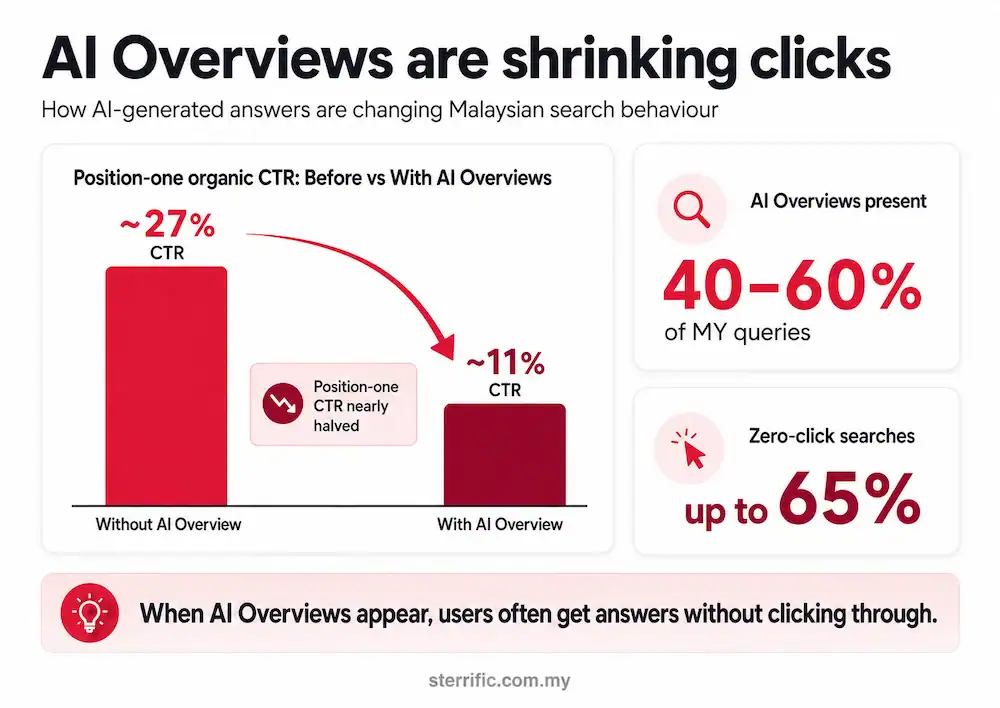
- The AI Overview layer made it worse. AI Overviews now appear on 40–60% of Malaysian commercial and informational queries, zero-click searches run up to 65% (higher on mobile), and position-one clicks on AI-Overview-heavy queries have fallen from roughly 27% to as low as 11%.
- The recovery lever is E-E-A-T, not tricks. Google says there’s “no specific action” to recover, but that’s not “do nothing.” The game plan (triage, author identity, proof, market fit, AI-citability) and a 90-day sequence are in Section 7.
Why this study, and why it matters at national scale
Most “core update” write-ups this month recycle the same global commentary. Very few look at what the update actually did to Malaysian page one, a different market, with a different mix of local businesses, foreign aggregators, and Bahasa-versus-English intent. That gap is what this study fills. We took Google’s own timeline and the industry’s winner/loser data, then went and analysed live Malaysian search results ourselves across seven industries to see how the pattern plays out here.
The stakes are national. Malaysia has roughly 35.4 million internet users, about 98% of the population, and Google commands around 93% of the search market here (DataReportal Digital 2026 Malaysia; StatCounter, May 2026). There is no meaningful second search engine to fall back on. So when Google re-tunes its core ranking, it isn’t one channel among many for a Malaysian business, for most, it is the channel. A single core update can quietly erase a quarter of inbound demand before anyone notices the pipeline thinning.
A note on method before we start: figures we measured ourselves come from Ahrefs Site Explorer and live SERP checks, country = Malaysia, on 10 July 2026. Every other statistic is attributed inline to its source and linked. Where a number is an estimate or a directional signal rather than a hard measurement, we say so.
1. What the May 2026 core update actually was
Google runs broad core updates several times a year. They are not penalties and they don’t target individual sites; they are periodic re-tunings of how Google’s core systems weigh relevance and quality across the whole web. When one lands, rankings move, sometimes sharply, and Google’s standing line is that a drop “may not signal anything is wrong with your pages.”
Three features make the May 2026 update matter more than a routine re-tune, especially in Malaysia:
It was big, and it was fast. The rollout began 21 May 2026 and Google confirmed completion on 2 June 2026, under 12 days, slightly ahead of the “up to two weeks” Google quoted at launch (Search Engine Land). Trackers logged volatility spikes across the weekends of 23–24 May and 30 May–1 June, then a final spike on 2 June. Practitioners described it as feeling larger than the March 2026 core update that preceded it (Search Engine Roundtable).
It arrived on the heels of Google I/O 2026. The update dropped roughly two days after Google I/O, where Google announced a major AI-driven Search update powered by Gemini 3.5 Flash, and it coincided with heavier AI Overview presence across a wide range of queries. Multiple analyses tie the two together, noting that position-one organic click-through rate on AI-Overview-heavy queries fell from roughly 27% to as low as 11%, a near-60% loss of clicks from the same ranking position (industry analysis). Translation: you could keep your ranking and still lose most of your traffic.
It was, at heart, a quality-and-intent reset. The clearest through-line in the post-update analyses is that Google reweighted results toward the source type a searcher most likely wanted, for that query, in that market, in that format. Depth, original research, expert perspective and visible human review gained; thin, surface-level, heavily aggregated content lost. Notably, the analyses found no evidence the update targeted AI-generated content as such, well-edited, genuinely useful AI-assisted content ranked fine, while low-quality, minimally-edited AI content ranked worse (industry winners/losers analysis).
What this means for you: the update didn’t punish how content was made. It punished content that wasn’t genuinely helpful, wasn’t clearly owned by a credible author, or wasn’t the right result for that market.

2. Who won and who vanished, the web-wide pattern
Across the independent post-update analyses, the winner/loser profile is strikingly consistent. At the halfway point of the rollout, one widely-cited tracker classified 8,887 domains as roughly 5,039 winners and 3,845 losers, with about 80% of top-10 results shifting position (industry winners/losers analysis). The qualitative shape:
Winners
Large, established brands and institutional publishers. Sites that matched what the user was genuinely trying to accomplish. Sites that spoke to a specific market rather than a generic global audience. Sites that owned their content rather than aggregating other people’s.
Losers
Job portals, travel-comparison and price-aggregation sites built on interchangeable templates, precisely where a more helpful original exists. Generic AI affiliate reviews without hands-on experience (one analysis put 71% of affiliate sites in measurable decline). And wrong-market pages: results serving the wrong country version of a query were among the biggest losers.
Put simply, the update thinned out the interchangeable middle, the templated, the aggregated, the wrong-market and the lazy-AI, and rewarded the specific, the owned and the genuinely expert. The question for us is: how does that pattern actually look on Malaysian page one? So we went and looked.

3. What we found on Malaysian page one (original SERP analysis)
Rather than stare at one industry, we deliberately spread the analysis across seven industries a Malaysian business might live in, property, consumer finance, SME finance, health/medical, local services, B2B software, and professional/agency services, pulling live top-10 results (Ahrefs, country = Malaysia, 10 July 2026). The goal was to test whether the update’s “market fit beats authority” promise holds the same way everywhere. It does not. It splits Malaysian search into two opposite worlds, and which world your query lives in decides your entire strategy.
| Industry, sample query | Who owns page one | The pattern |
|---|---|---|
| Property, “property for sale malaysia” | Portals: iProperty (DR 69, ~54k visits), PropertyGuru (DR 71), Mudah (DR 71); foreign portals Realtor and realestate.com.au behind them | Aggregator fortress, no individual agent |
| Consumer finance, “personal loan malaysia” | Banks: CIMB (DR 71), Maybank (DR 75), RHB, HLB, UOB, plus one comparison aggregator | Institutional fortress |
| SME finance, “sme loan malaysia” | Government first: BNM (DR 79), SME Bank, SME Corp, SJPP; then banks and fintech lenders | Government + institutions; the advice layer is open |
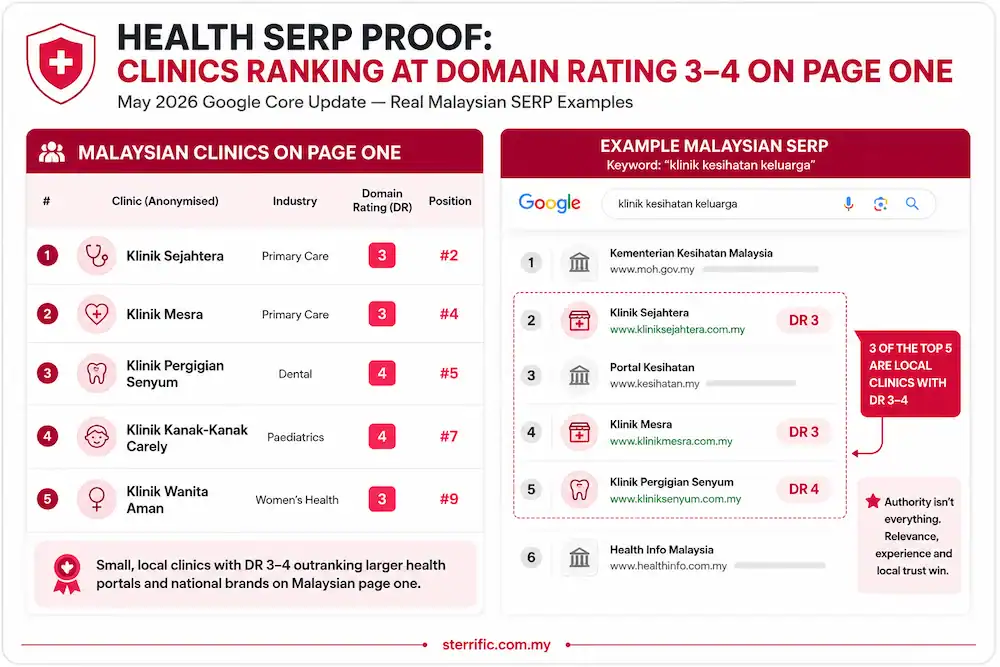
| Health / medical, “aesthetic clinic kuala lumpur” | Actual clinics, several at DR 3–4, plus health directories (DoctorOnCall, Erufu) | Local businesses win at almost zero authority |
| Local services, “aircond service” | Home-services aggregators and directories at the top, local operators mixed in | Aggregator-led, but local relevance breaks through |
| B2B software, “erp system malaysia” | “Top-10 / best ERP” listicles (DR 12–73) and vendors (Sage, DR 88) | A roundup-and-listicle battleground |
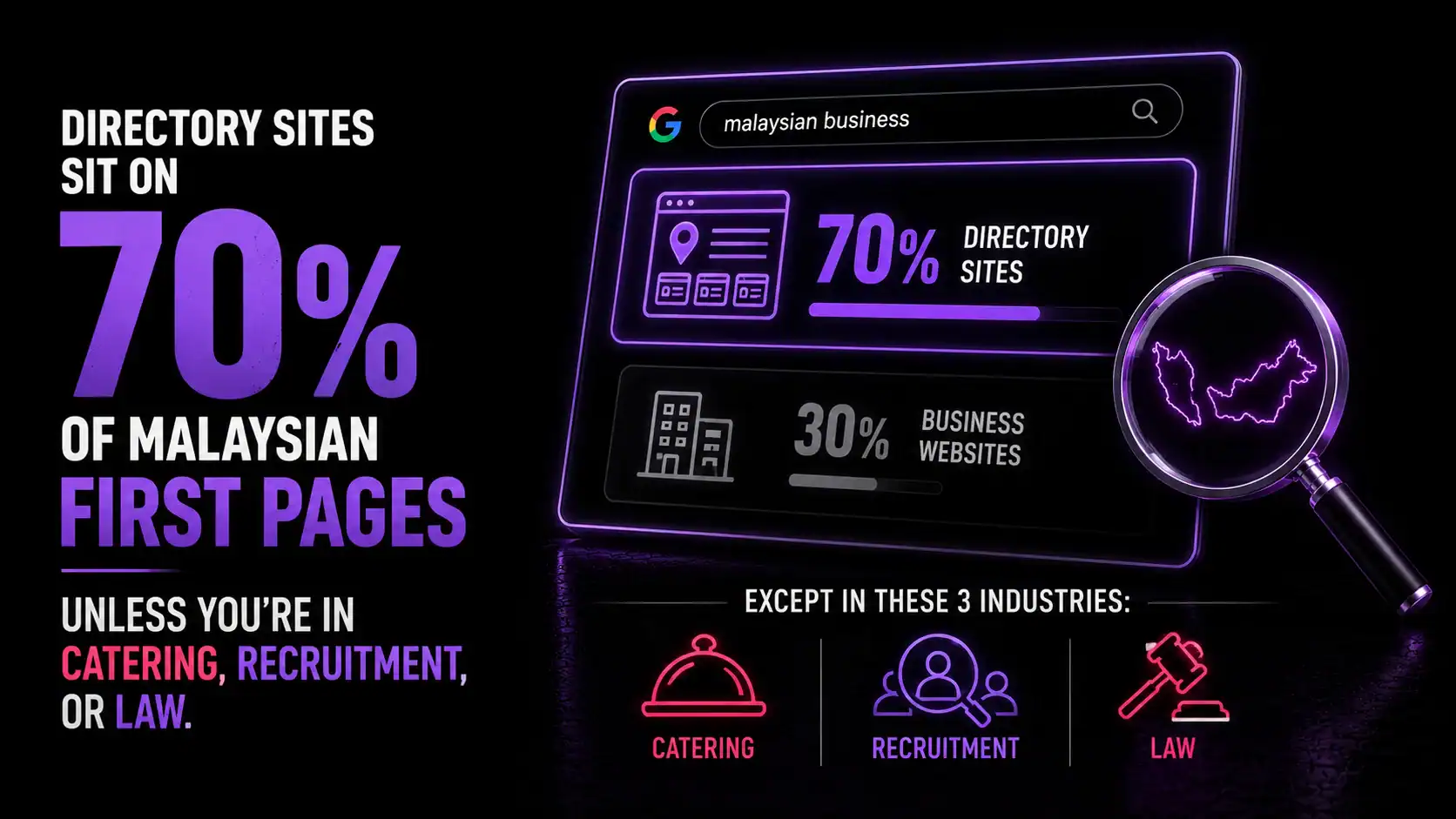
| Agency / marketing, “seo malaysia” | Foreign directories (Clutch DR 91, SE Ranking DR 85) at the peak; local agencies below; “web design malaysia” mostly local | Directories hold the top; winnability varies by term |
Five findings fall out of this, and each maps onto the update’s logic.
Finding 1, Malaysian search is really two worlds, and intent is the border. In one world (property, consumer finance) a dominant aggregator or institution owns the head term and an independent has no realistic path in: iProperty and the banks simply are the answer. In the other (health clinics, local services) Google ranks genuinely local businesses at astonishing low authority, with clinics at Domain Rating 3 and 4 sitting on page one for “aesthetic clinic kuala lumpur.” Same country, same week, opposite rules. The border between the two worlds is the searcher’s intent, the exact thing the May 2026 update reweighted toward. Before you write a word, work out which world your query lives in, because it decides whether the head term is winnable at all.
Finding 2, where intent is local, market fit demolishes authority. The health SERP is the clearest proof in the whole study that the update’s promise is real for small businesses. A DR-3 clinic outranking bigger sites should not happen under an “authority wins” model; it happens because Google reads “aesthetic clinic kuala lumpur” as “show me a real, relevant local clinic,” and a genuine local clinic fits that intent better than any high-authority directory. If your customers search with local intent, a service, a clinic, a nearby business, the update handed you a far bigger opening than you probably realise.
Finding 3, where intent is “compare / best,” the SERP belongs to lists. For B2B software (“erp system malaysia”) page one is dominated by “Top 10 ERP systems in Malaysia” roundups at wildly different authority, from DR 12 to DR 88, and the same shape shows up in property portals and in “best X” consumer queries. When the searcher wants a shortlist, Google gives them a shortlist. You beat a listicle by getting onto it, or by publishing a better, more transparent, genuinely first-hand one of your own.
Finding 4, government owns the highest-trust terms outright. On “sme loan malaysia,” the top of the page is the state: BNM (DR 79), SME Bank, SME Corp, and the SJPP guarantee scheme. It is the same on debt, retirement and “is this legitimate” searches. You do not out-rank a government agency on its own mandate, but the advice layer around it is wide open: we found fintech lenders and even a coworking space ranking with genuinely useful “why SME loans get rejected” and “grants you can apply for” content the agencies never publish.
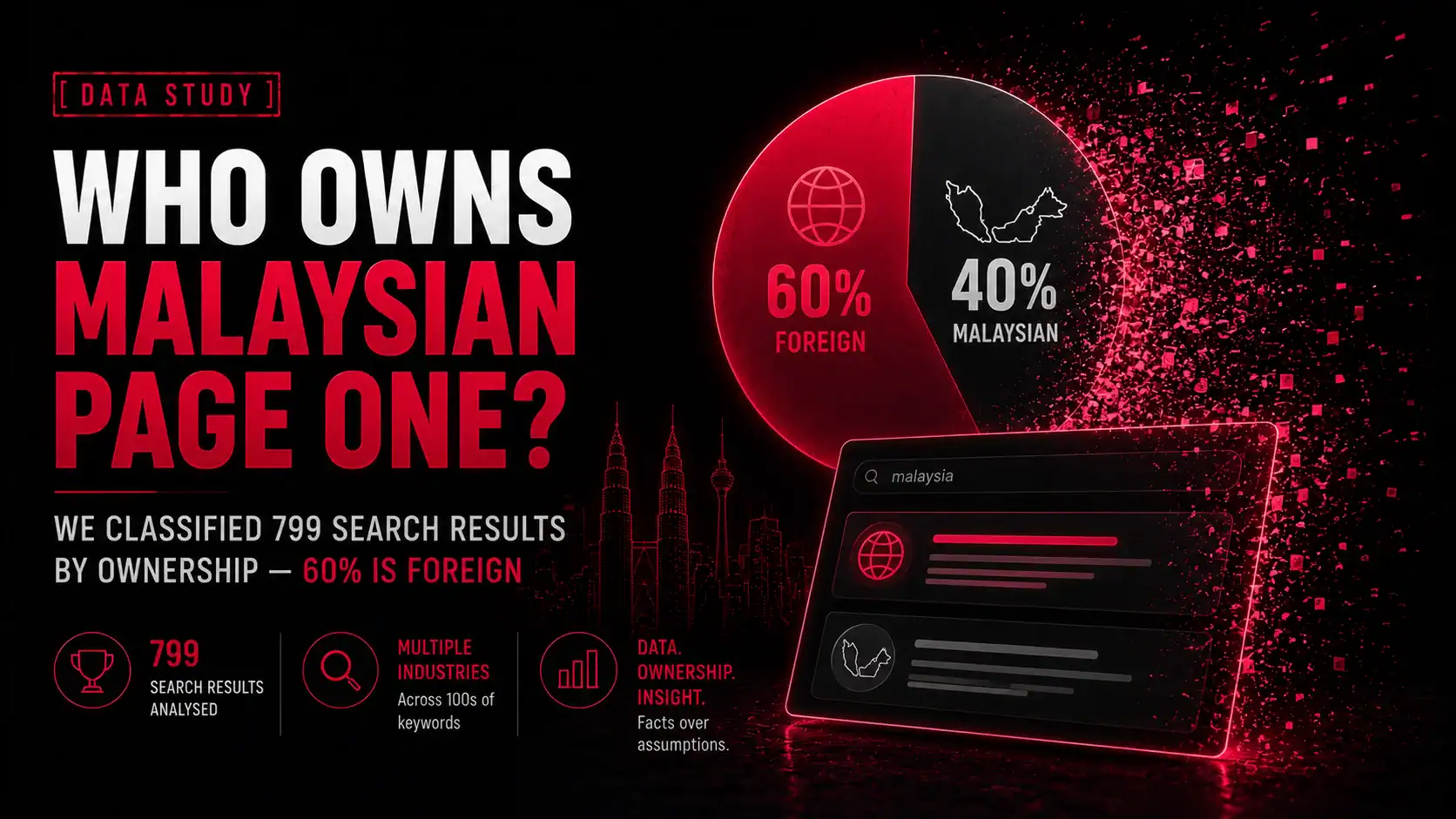
Finding 5, foreign still holds the peak on authority-driven terms. Where the intent is broad and commercial rather than local, foreign giants still leak in on raw authority: Clutch (DR 91) tops the agency terms, Realtor and realestate.com.au sit inside the property results, Sage (DR 88) anchors the B2B software list. This is the “60% of Malaysian page one is foreign” pattern in miniature, and it only holds where the query is generic enough that a global brand can credibly answer it. Make the query unmistakably local and the foreign advantage evaporates.
What this means: the May 2026 update did not make Malaysian search uniformly winnable or uniformly locked. It sharpened the split. Where a portal, a bank or the government owns the intent, the head term is a fortress and your route in is the long-tail advice around it. Where the intent is local and personal, the update tore the door off its hinges, and a DR-3 business can beat a DR-70 one simply by being the real, relevant, local answer. The businesses that win the next twelve months are the ones that correctly read which world each of their queries lives in, and stop fighting battles the intent has already decided.

4. The AI Overview layer, why ranking stopped being enough
If the core update were the only story, the plan would be simple: make better content, wait, climb. But the update is entangled with a second shift that changes the maths of Malaysian search, and you can’t plan around it if you don’t understand it.
Google AI Overviews, the AI-generated answer box above the classic links, rolled out in Malaysia through late 2024 and expanded through 2025; by early 2026 they appear across a wide range of local queries. To extend our mall analogy: an AI Overview is the concierge who answers the shopper’s question at the entrance, so they never walk to your shop at all. The reported numbers:
- AI Overviews now appear on 40–60% of Malaysian commercial and informational queries (reported by Malaysian practitioner analyses).
- Zero-click searches run up to 65% of Google queries in 2026, frequently ~75% on mobile, the searcher gets the answer and never leaves the results page.
- Organic CTR drops 15–30% on queries where an AI Overview sits above the fold, and position-one CTR on AI-Overview-heavy queries has fallen from roughly 27% to as low as 11%.
One nuance decides how worried a given business should be, and it’s about intent:
- Informational queries get hollowed out. “What is SEO,” “how does SSM registration work,” “cara buat…”, the AI answers the question, and the click never happens.
- Commercial queries are more resilient. “seo agency malaysia,” “web design malaysia,” “best aesthetic clinic KL”, the searcher’s intent is to find and contact a business, which an AI paragraph can’t satisfy, so the click keeps its value (Malaysian practitioner analysis).
This reframes the job. Money pages remain worth defending, the intent behind them survives AI Overviews. But top-of-funnel informational content can no longer chase clicks it will lose to the AI box; its new job is to earn the citation inside the box, which means building the author and brand authority that makes Google trust you enough to quote you. The Malaysian consensus, which we share, is that this isn’t “SEO versus AI”, traditional ranking and getting cited by the AI are the same investment in structured, credible, entity-backed content.
5. Why Malaysian business sites are structurally exposed
Put sections 1–4 together and three structural weaknesses made Malaysian business sites easy targets. Naming them is the bridge to fixing them.
- Thin, assertion-based commercial pages. The classic Malaysian “services” page asserts expertise (“We are the leading SEO agency in Malaysia”) without demonstrating it, no named author, no case data, no methodology, no proof. That’s the exact profile the update demoted, and it’s why so many high-authority foreign directories still outrank thin local pages: at least the directory answers the “give me a shortlist” intent.
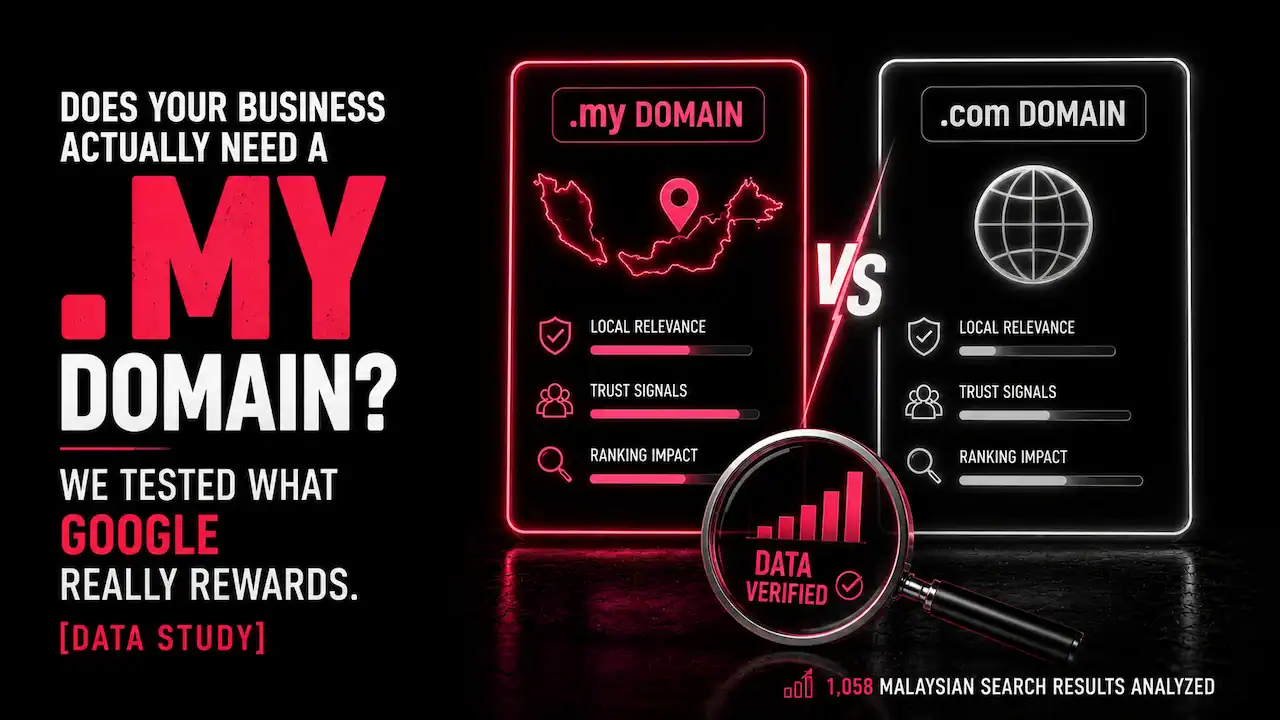
- Wrong-market and generic content. Malaysian SERPs skew foreign because a lot of Malaysian content is written to a generic, borderless template a bigger foreign site simply does better. The update’s reward for market fit means specifically, provably Malaysian content, real RM figures, real local examples, real local names, Bahasa where the audience searches in Malay, now has a structural tailwind it didn’t have six months ago. (We measured that language gap directly in Your Customers Search in Malay. Your Website Speaks English.)
- No author identity. Most Malaysian business content is published anonymously, by “Admin” or a faceless brand. After an update that explicitly leaned on showing “real authors with real skill,” anonymity is a liability rather than a neutral choice.
This anxiety isn’t abstract or imported, it’s a live conversation among Malaysian business owners. Local forums like Lowyat and Cari regularly carry threads from business owners watching their organic traffic slide and asking what changed; the demand-side worry is already being discussed in the community, not just in agency blogs. (We tried to pull richer first-hand discussion from Reddit’s r/malaysia, but Reddit is not accessible to our research crawler; see Limitations.)
None of these three weaknesses are technical problems. They are trust problems, which is why recovery is a trust project, not a plugin.
Which businesses this hits hardest, and the one move each should make
- The service SME (agency, contractor, clinic-with-a-blog). Your money pages probably assert more than they prove, and your blog is likely anonymous. You sit squarely in the demoted profile, but you’re also the fastest to fix. One move this month: put a real, credentialed author on every page.
- The YMYL business (lender, clinic, law firm). Finding 4 is blunt: the head terms belong to institutions, and you will not out-rank Maybank for “personal loan malaysia.” One move: abandon the head term and build genuinely helpful, first-hand comparison and question content around the long tail.
- The content or affiliate publisher. If your traffic came from thin, templated or lightly-edited AI pages, this update was built for you, and not kindly. One move: consolidate ruthlessly, a handful of deep, first-hand pages beats a hundred shallow ones.
If you only remember one line from this section: after May 2026, the cheapest points on the board are a real author and a genuinely local angle, and almost nobody in Malaysia has claimed them yet.
6. A quick self-diagnostic (10 minutes in Google Search Console)
Before you touch anything, diagnose, the wrong fix wastes the quarter. In Google Search Console:
- Compare the windows. Set the date filter to the 21 May–2 June rollout against the four weeks before it. If clicks and average position fell while impressions stayed roughly flat, that’s a core-update demotion, a quality/relevance re-rank, not a technical fault. (If impressions also collapsed, check indexing/coverage first, that’s a different problem.)
- Segment by page type. Filter to service pages, then guides, then case studies. They move differently, and the fix differs: a demoted service page usually needs proof and authorship; a demoted guide often needs first-hand depth or pruning.
- Check the SERP with your own eyes. Search your top queries in a clean browser. If an AI Overview now sits above your result, part of your loss is the AI layer, not your ranking, and no on-page rewrite wins back a click the AI answered. That portion is a citation problem, not a ranking problem.

Only once you know the mix, core-update demotion vs AI-Overview siphoning vs technical fault, should you pick levers. Fixing crawl errors won’t lift a quality demotion, and rewriting excellent content won’t recover a click an AI Overview swallowed.

7. What to actually do, the recovery playbook
First, the honest caveat, straight from Google: there are no magic actions that “recover” a core-update drop, and a drop doesn’t necessarily mean a page is “bad.” Anyone promising a guaranteed 30-day bounce-back is selling something. Recovery is gradual, it’s assessed at the next core update, and it comes from being genuinely more helpful and more credible than the alternatives, not from a checklist of tweaks.
That said, “no magic action” is not “do nothing.” The fastest sane path is to triage by page type, because the right lever differs sharply between a service page, a how-to guide and a case study.
The levers, in priority order
- Fix the trust foundation first: author identity. Add real, bylined authors with genuine credentials to every article and money page; build author-entity pages; add Person/author schema (Schema.org) and link to authors’ LinkedIn profiles. End anonymous “Admin” publishing. This is the cheapest, highest-leverage fix after a quality/E-E-A-T update, and the one most Malaysian sites skip.
- Rebuild money pages to prove, not assert. For each commercial page, add named practitioner authorship, specific Malaysian results and case data, a transparent “how we do this” section, client proof, and honest scope. The intent behind these queries survives AI Overviews, so these pages are worth the investment.
- Make top-of-funnel content genuinely first-hand, or prune it. Informational content now has to earn its place either by being citable by the AI or by offering something the AI can’t: original data, first-hand testing, real local examples. A helpful-content assessment judges the whole site’s helpfulness ratio, so thinning weak pages lifts the strong ones.
- Lean into market fit, be unmistakably Malaysian, in Malay where it counts. Real RM figures, local case studies, named Malaysian businesses, and Bahasa content for the Malay-searching audience. The Malay-language commercial field is far less contested than its English twin.
- Pick winnable battles by query type. Where the intent is local (a clinic, a nearby service), the head term itself is winnable with a genuinely local, credible page; where a portal, bank or government agency owns the intent (property, consumer loans, SME finance), go for the long-tail questions and comparisons the institutions answer poorly.
- Treat AI visibility and SEO as one investment. Structured data, entity consistency (name, address, phone across the web), and clear factual claims the AI can extract and attribute. On informational queries the goal shifts from “get the click” to “get cited.”
- Do the technical hygiene in parallel. Core Web Vitals (image compression especially), internal linking and crawl depth, and killing thin/duplicate pages, a multiplier on the content work, not a substitute for it.
- Be patient and measure honestly. Track clicks, impressions and average position by page type in GSC, and reassess at the next core update. Resist thrashing the site with weekly changes.

A sensible 90-day sequence for an affected Malaysian site
- Days 1–15: diagnose in GSC by page type; ship author identity + schema across the site; stop anonymous publishing.
- Days 16–45: rebuild the top 3–5 money pages with proof and Malaysian case data; begin the thin-content prune; pick your winnable query battles.
- Days 46–75: publish 2–3 genuinely first-hand, market-specific pieces (at least one in Bahasa) designed to be AI-citable; fix internal linking to them.
- Days 76–90: technical multipliers (CWV, duplicates); re-measure; hold steady into the next core update.
None of this is a weekend job, and doing it while still running the business is where most recovery plans stall. If you’d rather have a team that has already mapped these seven Malaysian SERP worlds run the triage and rebuild for you, that is exactly the work we do.
Lost ground after the May 2026 update?
We’ll diagnose whether it’s a core-update demotion or the AI-Overview layer, then rebuild your pages around genuine E-E-A-T and market fit.
Prefer the full picture first? See our digital marketing services.
The Final Take
The May 2026 core update did not “kill SEO in Malaysia,” and it did not punish anyone for using AI. What it did was raise the price of credibility. It re-drew the tenancy of Malaysian page one and handed the anchor units to whoever most convincingly matched what the searcher came for, genuinely helpful, visibly authored by real experts, and unmistakably built for the Malaysian market, while quietly evicting everything that only pretended to be those things.
That’s good news for Malaysian businesses, because our own SERP analysis shows the local market hasn’t caught up to the new rules. The highest-authority commercial results are still foreign directories; a DR-3 local business can already out-rank far bigger sites when it fits the intent better; the Malay-language field is barely defended. The 60% of Malaysian page one that’s foreign is not a wall, after this update, it’s an opening. The businesses that win the next twelve months won’t be the ones who game the algorithm fastest. They’ll be the ones who can prove, on the page, that they know Malaysia and know their craft.
Methodology
- What we measured. Live top-10 Malaysian results across seven industries, property (“property for sale malaysia”), consumer finance (“personal loan malaysia”), SME finance (“sme loan malaysia”), health/medical (“aesthetic clinic kuala lumpur”), local services (“aircond service”), B2B software (“erp system malaysia”), and agency/marketing (“seo malaysia,” “web design malaysia”), pulled from Ahrefs Site Explorer (SERP overview, country = Malaysia) on 10 July 2026, with domain rating and estimated traffic per result.
- How we classified. Each ranking result was tagged Malaysian or foreign/directory/platform by its registered entity and primary market. Domain rating is Ahrefs’ 0–100 authority score. This is a composition analysis, not a ranked league table.
- External data. Update timeline, winner/loser counts, AI Overview coverage and CTR figures, and Malaysian market statistics are attributed inline to their sources. Where figures come from third-party trackers or practitioner blogs rather than Google directly, we describe them as reported estimates.
- Cross-checks. Native-language terms and figures were reviewed by a Malaysian analyst. An evidence pack (our SERP exports and source list) is available on request.
Limitations
- A SERP snapshot is a moment in time. Our page-one analysis reflects 10 July 2026; results move daily, and a small sample of queries is not the whole market. Directional, not definitive.
- One query per industry is a probe, not a census. We used one representative query per industry to map the pattern; individual SERPs within an industry vary.
- Attribution is inferential. Where a site rose or fell, we cannot prove the cause was the core update versus the concurrent AI Overview expansion or normal seasonality; the two shifts overlap by design.
- UGC was limited. Reddit is not accessible to our research crawler; Lowyat and Cari searches surfaced only tangential threads.
- External estimates vary. Winner/loser counts and CTR figures differ across trackers; we cite representative figures and link sources so you can judge them yourself.
Sources
- Search Engine Land, May 2026 core update rollout complete
- Search Engine Journal, Google begins rolling out the May 2026 core update
- Search Engine Roundtable, May 2026 core update done rolling out
- DataReportal, Digital 2026: Malaysia
- StatCounter, Search engine market share, Malaysia
Relevant articles
- Why Does A Website You’ve Never Heard Of Beat Yours On Google?
- Do Shopee and Lazada Really Own Google Malaysia?
- Google’s AI Now Answers Your Customers Before They Ever Reach Your Website
- Your Customers Search in Malay. Your Website Speaks English
- We Dissected Malaysia’s Page One To See What Still Ranks
Steve Chan is the Director of Sterrific Sdn Bhd, a full-service digital agency in Petaling Jaya, and has led Malaysian search and digital-marketing campaigns for over a decade. SEO analysis by Alfi Rahman (SEO Lead, Sterrific). This study is based on Sterrific’s own live-market SERP analysis and primary-source research.
FAQ
When did the May 2026 Google core update roll out?
It began on 21 May 2026 and Google confirmed completion on 2 June 2026, about 12 days, and the second core update of 2026.
Did the update penalise AI-generated content?
No. Post-update analyses found no evidence it targeted AI content as such. Well-edited, genuinely helpful AI-assisted content ranked fine; low-quality, minimally-edited AI content ranked worse, a content-quality signal, not an “AI” signal.
How do I know if the update hit my Malaysian site?
Check Google Search Console for the 21 May–2 June window: a drop in clicks and average position while impressions stay roughly flat is the classic core-update signature (as opposed to a technical or indexing problem).
Is there a quick way to recover?
No. Google states there’s no specific action that guarantees recovery, and it’s reassessed at the next core update. The durable levers are genuine helpfulness, real authorship (E-E-A-T), market fit and pruning thin content, not quick tricks.
Why are foreign websites still ranking in Malaysia if the update rewards market fit?
Because much Malaysian content is generic and doesn’t prove its local expertise, while foreign directories carry very high domain authority. The update’s tilt toward market fit is the opening for genuinely local, first-hand, Malay-language Malaysian content to displace them.
Which Malaysian queries are actually winnable?
It depends which “world” the query is in. Where a portal, bank or government agency owns the intent (property, consumer loans, SME finance), the head term is a fortress and you target the long-tail advice around it. Where the intent is local (a clinic, a nearby service), the head term itself is winnable with a genuinely local, credible page, even at low authority, as our health SERP showed with clinics ranking at Domain Rating 3–4.